

HIV (human immunodeficiency virus) attacks the immune system, which is the body’s defense mechanism. When the virus targets and destroys specific white blood cells, the body becomes weak afterward and cannot fight off diseases.
This virus can be transmitted to the foetus or the newborn during conception, childbirth, or breastfeeding. Only blood, semen, fluids and breast milk have been proven to transmit this infection to infants.
For mothers who are HIV positive, there may be questions on the best way to treat and care for their infected babies, especially as regards breastfeeding and receiving regular vaccinations.
In this article, we will explore the facts and myths about breastfeeding and vaccinations for HIV-positive babies, weighing the options available for the babies’ well-being.
Can an HIV-positive mother exclusively breastfeed her HIV-positive baby?
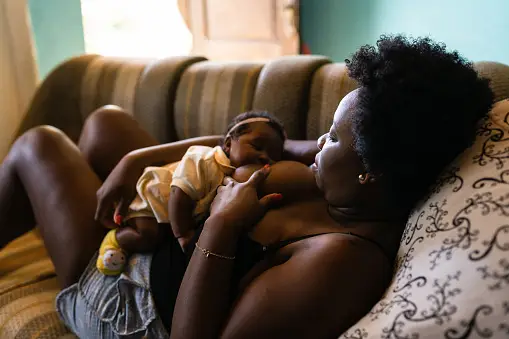
It is important to note that breastfeeding provides many benefits for babies, including transmitting antibodies that can protect them against certain diseases and improve their growth and development.
Some studies have shown that exclusive breastfeeding by an HIV-positive mother to her HIV-positive baby is possible if the mother is on antiretroviral therapy (ART), the baby is on prevention, and the viral load is undetectable.
The World Health Organization recommends lifelong antiretroviral treatment for all mothers living with HIV to support their health and promote exclusive breastfeeding for six months till the expiration of 6 months.
Once teething is established, stop breastfeeding and adopt other alternative nutritionally adequate and safe diets. Constant professional consultation is vital to encourage receiving regular medication to reduce viral loads.
How long should breastfeeding last for an HIV-positive baby?
The World Health Organization (WHO) advises that all infants be breastfed for at least 6 months, regardless of the mother's HIV status. After 6 months, the WHO recommends continued breastfeeding and appropriate complementary foods until teething.
The decision to continue breastfeeding beyond 6 months should be made in consultation with the child's healthcare provider, considering the health status of both the mother and the child.
Myth or Fact: An HIV-positive baby cannot receive regular vaccinations
All babies, including those born to HIV-positive mothers, should receive the full schedule of recommended vaccinations, starting at 2 months of age, but with some precautions.
Some specific vaccines, such as the live oral polio vaccine, should not be given to HIV-positive babies. Do not skip the importance of speaking to your child’s doctor first as regards the specific vaccinations to be taken or avoided.
List of vaccinations an HIV-positive baby can receive before 12 months
It is recommended for all babies, including HIV-positive babies, to receive the following vaccinations before 12 months of age:
- The hepatitis B vaccine is given at birth, 2 and 6 months of age.
- The Inactivated Poliovirus Vaccine (IPV) is given at 2 and 4 months of age.
- The Pneumococcal Conjugate Vaccine (PCV13) is given at 2, 4, 6, and 12 months of age.
- The Rotavirus vaccine is given at 2 and 4 months of age.
- The Influenza vaccine (flu shot) is given at 6 months of age and every year.
- The Diphtheria, Tetanus, and Acellular Pertussis (DTaP) vaccine is given at 2, 4, and 6 months of age.
- The Haemophilus influenzae type B (HIB) vaccine is given at 2, 4, and 6 months of age.
- A dose of the standard Measles, Mumps and Rubella (MMR) vaccine at 6 months, with a second dose as soon as possible after 9 months of age.
What is a vaccine contraindication in babies?
A vaccine should not be administered when a contraindication is present. Vaccine contraindications in HIV-positive babies refer to a situation where an infant or child cannot receive a specific vaccine or formulation of vaccine if there’s a history of severe allergic reaction or underlying disease.
Some vaccines, like oral polio, are not administered to HIV-infected babies because they tend to stir up severe illness in immunocompromised babies. Additionally, the live yellow fever vaccine is contraindicated for HIV-positive babies, as they may not be able to develop a protective immune response.
The diagnosis of HIV can be a frightening experience, but it's important to remember that with proper treatment and care, people living with HIV can live long and healthy lives. Good nutrition and vaccinations should be considered, as without them, a child's immune system weakens over time, and infections that are uncommon in healthy children begin to develop.
Breastfeeding remains the best source of nutrition for babies in the first 6 months of life. Ensure to exclusively breastfeed your baby if you’re capable. Endeavour to also screen for other infections such as Tuberculosis. It is also of great importance to always revert to your childcare provider.
Frequently Asked Questions (FAQs)
- Can an HIV-positive woman exclusively breastfeed an HIV-positive baby?
An HIV-positive mother can exclusively breastfeed her HIV-positive baby.
- Can an HIV-positive baby receive regular vaccinations?
An HIV-positive baby can receive regular vaccinations except in cases of contraindications.




Comments